1992 Democratic National Convention
1992 presidential election | |
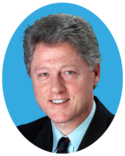  Nominees Clinton and Gore | |
| Convention | |
|---|---|
| Date(s) | July 13–16, 1992 |
| City | New York City |
| Venue | Madison Square Garden |
| Keynote speaker | Zell Miller |
| Candidates | |
| Presidential nominee | Governor Bill Clinton of Arkansas |
| Vice Presidential nominee | Senator Al Gore of Tennessee |
| Voting | |
| Total delegates | 4,201 |
| Votes needed for nomination | 2,103 |
| Results (President) | Clinton (AR): 3,372 (80.27%) Brown (CA): 596 (14.19%) Tsongas (MA): 209 (4.98%) Casey (PA): 10 (0.24%) Schroeder (CO): 8 (0.19%) Agran (CA): 3 (0.07%) Others: 3 (0.07%) |
| Ballots | 1 |
The 1992 National Convention of the U.S. Democratic Party nominated Governor Bill Clinton of Arkansas for President and Senator Al Gore from Tennessee for Vice President; Clinton announced Gore as his running-mate on July 9, 1992. The convention was held at Madison Square Garden in New York City, New York from July 13 to July 16, 1992. The Clinton-Gore ticket then faced and defeated their Republican opponents, President George H. W. Bush and Vice President Dan Quayle as well as the independent ticket of Ross Perot and James Stockdale in the 1992 presidential election.
The convention's keynote speaker was Georgia Governor Zell Miller who said, "Not all of us can be born rich, handsome, and lucky, and that's why we have a Democratic Party" and added,
"Our Commander in Chief talks like Dirty Harry but acts like Barney Fife." Other notable speakers included Democratic National Committee Chair Ron Brown, Elizabeth Glaser, and New York Governor Mario Cuomo.
The convention, organized by chairman Ron Brown, was seen as a great success. Unlike some earlier Democratic conventions, it had been well planned and run with few gaffes or errors, as even Republicans conceded. As Clinton finished his acceptance speech Fleetwood Mac's "Don't Stop", which would become the theme song of Bill Clinton's 1992 campaign, was played several times during the balloon drop and celebration.
Clinton received a significant poll bounce from the convention, due to both the perceived success of the convention, as well as Ross Perot announcing he was withdrawing from the campaign just as the convention was ending (Perot got back into the race in October).
The convention bounce gave the Clinton/Gore ticket a lead that only shrank significantly when Ross Perot re-entered the race.[1] Clinton and Gore went on to defeat President Bush and Vice-President Quayle, as well as independent candidate Ross Perot and his running mate, James Stockdale, in the general election.
Contents
1 Casey controversy
2 Jerry Brown
3 The official tally
3.1 President
3.2 Vice President
4 See also
5 References
6 External links
Casey controversy
Pennsylvania Governor Bob Casey wanted to speak at the convention, but did not speak. Casey maintained that he was denied a speaking spot because he intended to give a speech about his opposition to abortion, while the Clinton camp said that Casey did not speak because he had not endorsed the Clinton/Gore ticket.[2] After the convention was over, Casey told the New York Times, "I support the ticket. Period."[3] Other Democrats opposing abortions such as Chicago Mayor Richard M. Daley, Senators John Breaux and Howell Heflin, and five anti-abortion Democratic governors did speak. While Democratic officials said that these speakers were not barred from discussing their opposition to abortion, they nonetheless did not address the issue in their speeches.[2]
Casey asked both DNC Chairman Ron Brown and Texas Governor Ann Richards, the convention's chairwoman, for a speaking spot. Neither responded directly, and Casey later received a letter explaining that he would not receive a spot.[4]
Controversy regarding Casey's treatment at the 1992 Convention was frequently cited in media coverage of his son Bob Casey, Jr.'s successful 2006 Pennsylvania Senate campaign against Republican incumbent Rick Santorum.[4][5][6]
Jerry Brown
Former California Governor Jerry Brown, who was still an active candidate with a large amount of delegates and had not withdrawn to support the clear nominee—thus not being given a speaker's spot by the convention organizers—addressed the convention to state his case for a "humility agenda" by seconding his own nomination.
The official tally
 Play media
Bill Clinton's acceptance speech

Madison Square Garden, the site of the 1992 Democratic National Convention

Senator Barbara Mikulski with female Senate candidates
President
| Democratic National Convention presidential vote, 1992 | ||
|---|---|---|
| Candidate | Votes | Percentage |
Bill Clinton | 3372 | 78.64% |
Jerry Brown | 596 | 13.90% |
Paul Tsongas | 289 | 6.74% |
Robert P. Casey | 10 | 0.23% |
Pat Schroeder | 5 | 0.12% |
Larry Agran | 3 | 0.07% |
Al Gore | 1 | 0.02% |
| Abstentions | ||
Totals | 4,288 | 100.00% |
Vice President
Gore was nominated by acclamation on a voice vote.
See also
- Bill Clinton presidential campaign, 1992
- 1992 Democratic presidential primary
- 1991 Libertarian National Convention
- 1992 Republican National Convention
- United States presidential election, 1992
- History of the United States Democratic Party
- List of Democratic National Conventions
- U.S. presidential nomination convention
References
^ Toner, Robin (October 6, 1992). "THE 1992 CAMPAIGN: Poll; Poll Finds Hostility to Perot And No Basic Shift in Race". The New York Times. Retrieved April 20, 2010..mw-parser-output cite.citation{font-style:inherit}.mw-parser-output q{quotes:"""""""'""'"}.mw-parser-output code.cs1-code{color:inherit;background:inherit;border:inherit;padding:inherit}.mw-parser-output .cs1-lock-free a{background:url("//upload.wikimedia.org/wikipedia/commons/thumb/6/65/Lock-green.svg/9px-Lock-green.svg.png")no-repeat;background-position:right .1em center}.mw-parser-output .cs1-lock-limited a,.mw-parser-output .cs1-lock-registration a{background:url("//upload.wikimedia.org/wikipedia/commons/thumb/d/d6/Lock-gray-alt-2.svg/9px-Lock-gray-alt-2.svg.png")no-repeat;background-position:right .1em center}.mw-parser-output .cs1-lock-subscription a{background:url("//upload.wikimedia.org/wikipedia/commons/thumb/a/aa/Lock-red-alt-2.svg/9px-Lock-red-alt-2.svg.png")no-repeat;background-position:right .1em center}.mw-parser-output .cs1-subscription,.mw-parser-output .cs1-registration{color:#555}.mw-parser-output .cs1-subscription span,.mw-parser-output .cs1-registration span{border-bottom:1px dotted;cursor:help}.mw-parser-output .cs1-hidden-error{display:none;font-size:100%}.mw-parser-output .cs1-visible-error{font-size:100%}.mw-parser-output .cs1-subscription,.mw-parser-output .cs1-registration,.mw-parser-output .cs1-format{font-size:95%}.mw-parser-output .cs1-kern-left,.mw-parser-output .cs1-kern-wl-left{padding-left:0.2em}.mw-parser-output .cs1-kern-right,.mw-parser-output .cs1-kern-wl-right{padding-right:0.2em}
^ ab Michael Crowley, "Casey Closed," The New Republic, September 16, 1996.
^ Hinds, Michael Decourcy (July 19, 1992). "Pennsylvania; Democratic Ticket Heads Into Fertile Territory". New York Times. Section 1, Page 20.
^ ab Peter J Boyer (November 14, 2005). "The Right to Choose". The New Yorker. Archived from the original on February 19, 2012. Retrieved 2012-02-16.
^ Alan Cooperman (September 15, 2006). "Senate Candidate Speaks of Life, Faith". The Washington Post: A03.
^ ROBIN TONER (March 5, 2006). "To Democrats Hungry for Senate, a Pennsylvania Seat Looks Ripe". The New York Times.
External links
Democratic Party Platform of 1992 at The American Presidency Project
Clinton Nomination Acceptance Speech for President at DNC (transcript) at The American Presidency Project
- Complete text and audio of Barbara Jordan's Keynote Address
- Complete text and audio of Elizabeth Glaser's Address
- Complete text and audio of William Jefferson Clinton's Acceptance Address
- List of members from various state delegations to convention
- Video of Clinton nomination acceptance speech for President at DNC (via YouTube)
- Audio of Clinton nomination acceptance speech for President at DNC
- Video of Gore nomination acceptance speech for Vice President at DNC (via YouTube)
- Audio of Gore nomination acceptance speech for Vice President at DNC
- Transcript of Gore nomination acceptance speech for Vice President at DNC
- Video of Zell Miller's keynote address at Democratic National Convention
| Preceded by 1988 Atlanta, Georgia | Democratic National Conventions | Succeeded by 1996 Chicago, Illinois |
United States Democratic Party | |||||||
|---|---|---|---|---|---|---|---|
| Chairpersons of the DNC |
| ||||||
| Presidential tickets |
| ||||||
| State and Territorial Parties |
| ||||||
Conventions (List) |
| ||||||
| Affiliated groups |
| ||||||
| Related articles |
| ||||||
| |||||||
 Portal
Bill Clinton | ||
|---|---|---|
| ||
| Presidency |
|  |
| Life and legacy |
| |
| Books |
| |
| Popular culture |
| |
| Elections |
| |
| Family |
| |
| ||
Al Gore | ||
|---|---|---|
| ||
| Politics |
|  |
| Environment |
| |
| Technology |
| |
| Recognition |
| |
| Books |
| |
| Family |
| |
| ||
 Category

